
Hunter Virus: The Growing Threat of Modern Cyber Attacks
# Hunter Virus: The Growing Threat of Modern Cyber Attacks
In today’s digital world, cyber threats have become more dangerous than ever before. As technology continues to evolve, hackers and cybercriminals constantly develop new methods to attack computers, networks, and personal devices. Among the many forms of malicious software spreading across the internet, the “Hunter Virus” has become a term associated with aggressive cyber threats designed to steal information, damage systems, and compromise security. While the name may sound fictional to some people, it reflects the growing reality of advanced malware operating in the modern digital landscape.
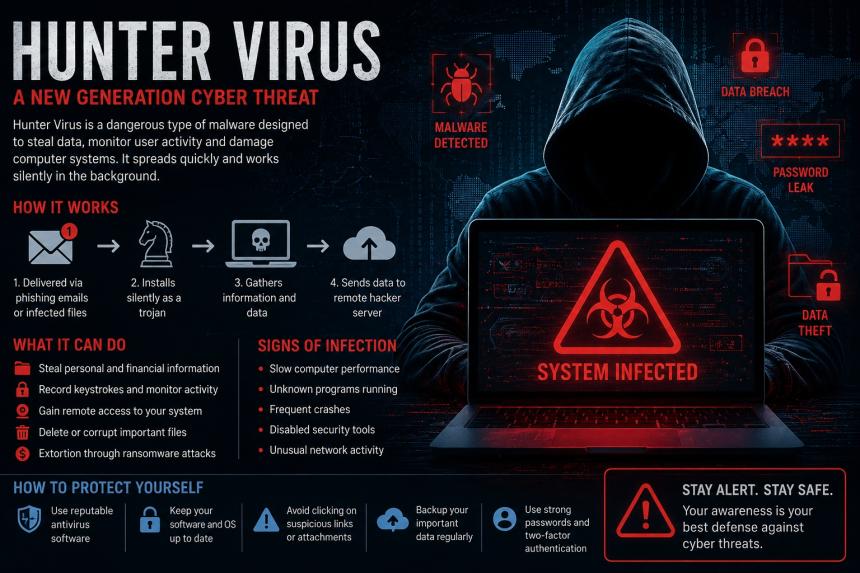
A computer virus is a type of malicious software created to infiltrate devices without the user’s permission. Once inside a system, the virus can replicate itself, spread to other files, and perform harmful actions. Some viruses simply slow down a computer, while others can steal passwords, delete important documents, monitor user activity, or even give hackers remote control over a device. The so-called Hunter Virus represents a category of threats focused on “hunting” valuable information from victims.
One of the most dangerous characteristics of modern cyber viruses is their ability to remain hidden. Unlike older viruses that caused obvious problems immediately, advanced malware often works silently in the background. Victims may not realize their information is being stolen until significant damage has already occurred. Cybercriminals design these programs to avoid detection by antivirus software and security systems, making them increasingly difficult to stop.
The Hunter Virus concept is commonly associated with spyware and trojan-style attacks. Spyware secretly monitors user activity, collecting information such as passwords, banking details, browsing history, and personal messages. Trojans, meanwhile, disguise themselves as legitimate programs or files to trick users into downloading them. Once activated, the malware gains access to the system and begins executing malicious actions.
Cybercriminals distribute viruses through many different methods. One of the most common techniques is phishing emails. Victims receive messages that appear to come from trusted companies, banks, or online services. These emails often contain fake links or infected attachments. When the user clicks the link or downloads the file, the malware installs itself on the device. Social engineering plays a major role in these attacks because hackers rely on human mistakes rather than only technical weaknesses.
Another major source of infections comes from unsafe websites and illegal downloads. Many users unknowingly expose themselves to cyber threats by downloading pirated software, visiting suspicious websites, or clicking advertisements from untrusted sources. Some malware can even infect a device automatically through security vulnerabilities in outdated systems or applications.
The consequences of a virus infection can be extremely serious. Personal users may lose private photos, financial information, or important files. Businesses face even greater risks because cyberattacks can shut down operations, expose customer data, and cause major financial losses. In some cases, ransomware attacks encrypt company data and demand payment in exchange for restoring access. Hospitals, schools, and government institutions have all experienced devastating cyber incidents in recent years.
One reason cyber threats continue growing is the increasing amount of personal information stored online. Modern society depends heavily on digital services such as online banking, social media, cloud storage, and remote work systems. Every connected device creates another potential target for hackers. Smartphones, tablets, smart TVs, and even household appliances connected to the internet can become vulnerable if not properly secured.
Cybersecurity experts constantly work to develop stronger defenses against malware attacks. Antivirus software, firewalls, encryption systems, and multi-factor authentication all help reduce the risk of infection. However, technology alone is not enough. User awareness remains one of the most important elements of cybersecurity. People who understand basic digital safety practices are far less likely to become victims of malicious attacks.
Strong passwords are essential for protecting online accounts. Experts recommend using complex passwords that combine letters, numbers, and symbols rather than simple words or personal information. It is also important to avoid using the same password across multiple platforms. Multi-factor authentication adds another layer of security by requiring users to verify their identity through additional methods such as text messages or authentication apps.
Keeping software updated is another critical defense against viruses. Developers regularly release security patches designed to fix vulnerabilities that hackers may exploit. Users who ignore updates leave their devices exposed to known security weaknesses. Regular system maintenance and software updates significantly reduce cyber risks.
Education also plays a major role in fighting digital threats. Schools, businesses, and organizations increasingly provide cybersecurity training to help people recognize phishing scams, suspicious websites, and dangerous downloads. In many cases, a single careless click can compromise an entire network, making human awareness a key part of modern digital defense.
Artificial intelligence is now influencing both cybersecurity and cybercrime. Security companies use AI systems to detect unusual behavior and identify threats faster than traditional methods. Unfortunately, hackers are also using advanced technologies to create more sophisticated malware capable of adapting and avoiding detection. This ongoing battle between cyber defenders and cybercriminals continues to shape the future of internet security.
Governments worldwide are also becoming more involved in cybersecurity efforts. Many countries now consider cyberattacks a national security issue because attacks on critical infrastructure can disrupt power systems, transportation, communication networks, and healthcare services. International cooperation between governments and technology companies has become increasingly important in combating global cyber threats.
Despite the dangers posed by viruses like the Hunter Virus, there are effective ways to stay safe online. Avoiding suspicious links, downloading software only from trusted sources, backing up important files regularly, and using reliable security tools can dramatically reduce the risk of infection. Cybersecurity is no longer only the responsibility of experts — it has become an essential part of everyday digital life.
In conclusion, the Hunter Virus symbolizes the growing complexity and danger of modern cyber threats. As technology advances, cybercriminals continue developing new ways to target individuals and organizations. Understanding how these threats operate is the first step toward building stronger digital security. In a world increasingly connected through technology, awareness, caution, and proper cybersecurity practices are
more important than ever before.