
Sean Strickland: The Fighter Who Refuses to Be Predictable
# Sean Strickland: The Fighter Who Refuses to Be Predictable
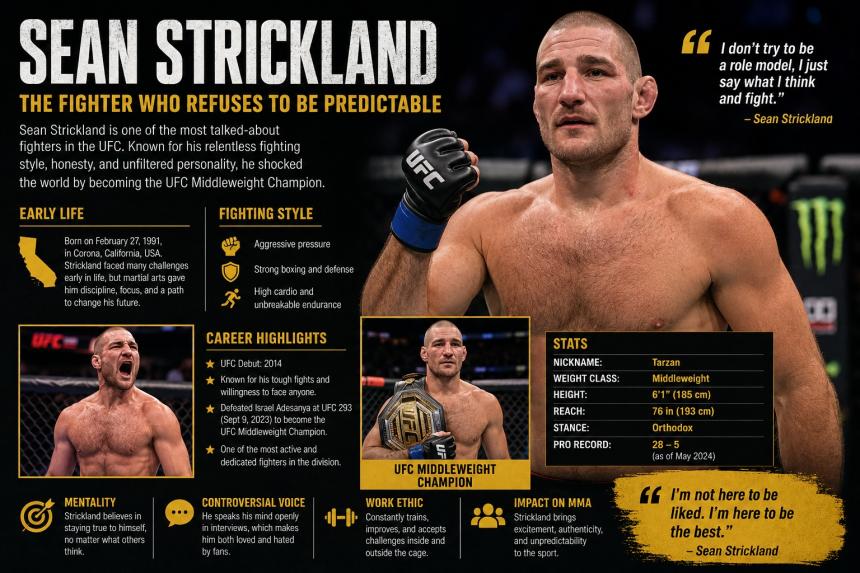
In the world of mixed martial arts, personalities are often just as important as athletic ability. Some fighters become famous because of their championships, others because of their charisma, and a few because they constantly challenge expectations. One of the most controversial and unpredictable figures in modern MMA is Sean Strickland. Known for his aggressive fighting style, unfiltered interviews, and fearless attitude inside the cage, Strickland has built a reputation as one of the sport’s most talked-about competitors.
Born in California in 1991, Sean Strickland entered combat sports at a young age. Like many professional fighters, he faced personal struggles during his early years, and martial arts became more than just a hobby — it became a path toward discipline and identity. Training in mixed martial arts gave him structure, confidence, and a sense of purpose. Over time, his dedication transformed him into a professional athlete capable of competing against some of the best fighters in the world.
Strickland first gained attention fighting in smaller promotions before eventually reaching the Ultimate Fighting Championship, commonly known as the UFC. Entering the UFC is a dream for most fighters, but surviving there is even more difficult. The organization is filled with elite athletes, world champions, and rising talents from every corner of the globe. Yet Strickland quickly proved that he belonged among them through his relentless pressure, toughness, and willingness to fight anyone.
Unlike many fighters who rely heavily on flashy techniques or dramatic knockouts, Strickland’s style is built around consistency and pressure. He uses sharp boxing combinations, intelligent defense, and nonstop forward movement to overwhelm opponents. His fighting approach may appear simple at first glance, but it requires incredible stamina, timing, and mental focus. Many opponents struggle against him because he constantly controls the pace of the fight and refuses to back down under pressure.
One of the defining moments of Strickland’s career came when he shocked the MMA world by defeating Israel Adesanya for the UFC Middleweight Championship. At the time, many fans and analysts considered Adesanya one of the most skilled strikers in the sport. Few expected Strickland to dominate the fight the way he did. However, through discipline, pressure, and tactical precision, he managed to neutralize Adesanya’s offense and secure a historic victory. The result changed public perception of Strickland overnight, transforming him from a controversial contender into a world champion.
Beyond his performances inside the cage, Strickland is equally famous for his personality. In interviews and press conferences, he often speaks openly and emotionally without filtering his opinions. Some fans appreciate his honesty because they believe it makes him authentic in an era where athletes are frequently media-trained. Others criticize him for making statements that create controversy or offend audiences. Regardless of opinion, Strickland consistently attracts attention because people never know what he might say next.
This unpredictability has made him one of the UFC’s most polarizing figures. Supporters view him as someone who refuses to act like a manufactured celebrity, while critics argue that certain comments cross the line between honesty and irresponsibility. In modern sports culture, where social media amplifies every statement instantly, athletes often face pressure to carefully control their public image. Strickland, however, appears uninterested in following traditional public relations strategies.
Despite the controversy, many fellow fighters respect his commitment to competition. Inside the cage, Strickland is known for accepting difficult fights and remaining active even after injuries or setbacks. His work ethic and toughness have earned admiration from trainers and athletes throughout the MMA community. In a sport where mental strength is just as important as physical ability, his resilience has become one of his greatest qualities.
Another reason why Sean Strickland remains important in MMA is that he represents a different kind of athlete. Modern sports stars are often carefully branded and marketed, but Strickland’s image feels raw and unpredictable. Whether fans love him or dislike him, he creates emotional reactions, and emotional reactions are part of what keeps combat sports exciting. Audiences are drawn to fighters who appear genuine, especially in a media environment filled with scripted content and controlled narratives.
At the same time, his career also highlights the complicated relationship between entertainment and responsibility in professional sports. Fighters are not only athletes; they are also public figures with influence over millions of fans. Strickland’s story raises questions about freedom of expression, media attention, and the boundaries of public behavior. These debates have become increasingly common in modern sports culture, where athletes are expected to balance authenticity with professionalism.
Ultimately, Sean Strickland is more than just a UFC fighter. He is a symbol of unpredictability in a sport built on intensity and emotion. His journey from troubled beginnings to world champion demonstrates the transformative power of discipline and determination. While opinions about his personality may remain divided, few people can deny his impact on mixed martial arts.
As the UFC continues to evolve and attract global audiences, fighters like Strickland ensure that the sport remains dramatic, emotional, and impossible to ignore. Whether he is speaking at a press conference or stepping into the octagon, Sean Strickland consistently reminds fans that combat sports are not only about winning fights — they are also about personality, identity, and the human strugg
le behind every athlete.