
The United States and Enriched Uranium in Different Countries
# The United States and Enriched Uranium in Different Countries
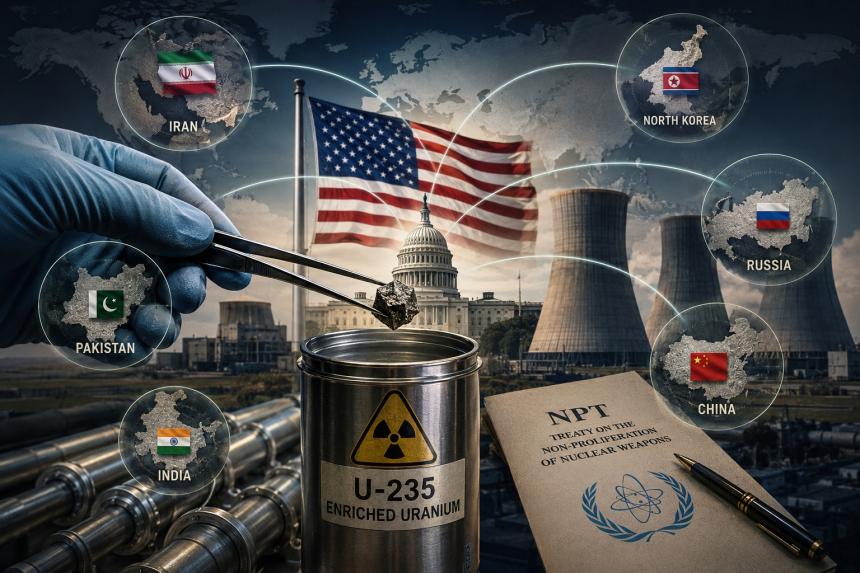
Enriched uranium has become one of the most important and controversial materials in modern international politics. It plays a major role in both peaceful nuclear energy production and the development of nuclear weapons. Because of its strategic importance, the issue of uranium enrichment has attracted global attention, especially from the United States, which has long worked to control and regulate nuclear technology around the world.
Uranium is a naturally occurring element found in the Earth’s crust. However, natural uranium contains only a small percentage of the isotope Uranium-235, which is necessary for nuclear reactions. Through a process called enrichment, the concentration of Uranium-235 is increased. Low-enriched uranium is commonly used in nuclear power plants to generate electricity, while highly enriched uranium can potentially be used to produce nuclear weapons. This dual-use nature makes enriched uranium a highly sensitive issue in international relations.
The United States became the world’s first nuclear power during World War II after developing atomic bombs under the Manhattan Project. Since then, Washington has maintained a leading role in shaping global nuclear policies. The U.S. government argues that preventing the spread of nuclear weapons is essential for maintaining international peace and security. For this reason, it strongly supports the International Atomic Energy Agency, which monitors nuclear activities worldwide.
One of the most debated cases involving enriched uranium is Iran. Iran insists that its nuclear program is intended for peaceful purposes such as energy production and scientific research. However, the United States and several Western countries have expressed concerns that Iran could eventually develop nuclear weapons capabilities. These tensions led to years of sanctions and diplomatic negotiations.
In 2015, Iran and major world powers signed the Joint Comprehensive Plan of Action, commonly known as the Iran nuclear deal. Under the agreement, Iran agreed to limit its uranium enrichment activities in exchange for sanctions relief. The United States initially supported the agreement, but in 2018 the administration of President Donald Trump withdrew from the deal, arguing that it was insufficient to stop Iran’s long-term nuclear ambitions. This decision increased tensions in the Middle East and raised fears about a possible nuclear arms race in the region.
Another important example is North Korea. Unlike Iran, North Korea openly developed nuclear weapons and conducted several nuclear tests. The United States has repeatedly imposed sanctions on North Korea and attempted diplomatic negotiations to reduce tensions. Despite international pressure, North Korea continues to advance its nuclear capabilities, making it one of the most serious nuclear security concerns in the world today.
The relationship between the United States and Russia regarding enriched uranium is also highly significant. Russia possesses one of the largest nuclear arsenals in the world and is a major supplier of nuclear fuel to several countries. Although Washington and Moscow cooperated in the past on nuclear arms reduction treaties, political tensions between the two countries have increased in recent years. Issues such as military conflicts, cyber security, and geopolitical competition have complicated cooperation on nuclear matters.
Meanwhile, China has expanded its nuclear energy sector rapidly over the last two decades. China argues that nuclear energy is necessary to meet its growing energy demands and reduce carbon emissions. However, the United States closely watches China’s nuclear development because of broader strategic competition between the two powers. American officials are concerned not only about military implications but also about technological and economic influence.
The case of India is unique. India developed nuclear weapons outside the framework of the Nuclear Non-Proliferation Treaty. Despite this, the United States has strengthened its strategic partnership with India over the years. In 2008, Washington supported a landmark civil nuclear agreement with India, allowing nuclear cooperation despite India not being a member of the treaty. Critics argued that this decision weakened global non-proliferation standards, while supporters claimed it improved relations with an important democratic ally.
Similarly, Pakistan possesses nuclear weapons and enriched uranium capabilities. The rivalry between India and Pakistan has created one of the most dangerous nuclear flashpoints in the world. The United States has often tried to balance its relations with both countries while encouraging stability and preventing conflict escalation.
In Europe, countries such as France and United Kingdom maintain advanced nuclear industries and close nuclear cooperation with the United States through alliances like NATO. These partnerships are based on shared security interests and mutual trust.
Overall, enriched uranium remains at the center of global politics and international security. The United States continues to play a leading role in shaping policies related to nuclear technology, balancing between supporting peaceful nuclear energy and preventing the spread of nuclear weapons. As technology advances and geopolitical tensions evolve, the issue of uranium enrichment will likely remain one of the most critical challenges facing the international community in t
he twenty-first century.