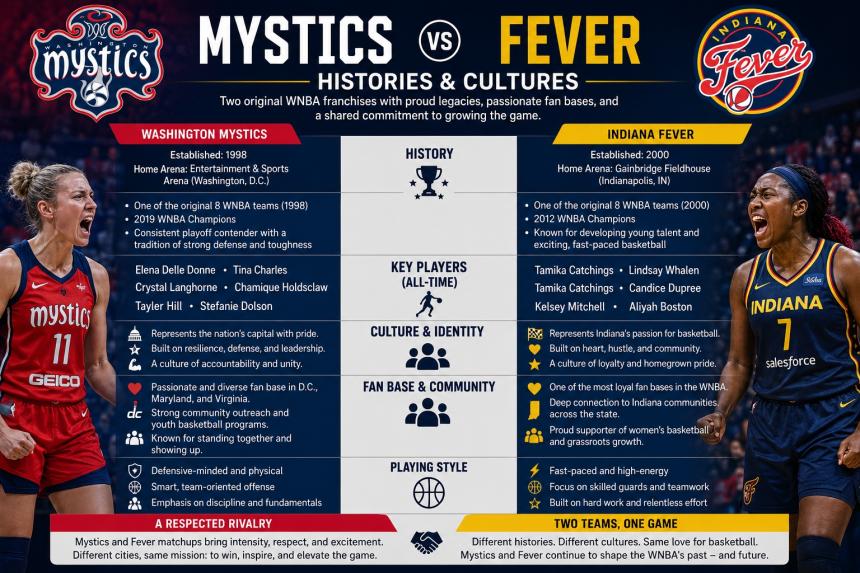

Mystics and Fever: Histories and Cultures
Mystics and Fever: Histories and Cultures
1. Introduction
What people think about mystics is shaped by fever. Fever influence ideas, beliefs, and practices associated with mystics. Fever is widely defined as a temperature above normal feelings caused by many factors, including infections, inflammation, injury, and psychiatric sickness. In addition to being a physical symptom, health sign, or social signal, fever sometimes acts as threshold to trance. Historical narrative reveals how fever can influence mystics and mystic perceptions.
Fever functions as a word, idea, and experience in multiple ways and appears in different social and cultural contexts. As an experience, fever describes an alteration in temperature above or below the norm, together with the combination of other signs and symptoms such that the overall experience indicates a loss of health. As a word, fever designates an illness; in some contexts, it is used in a symbolic sense as a metaphoric expression, indicating emotional or psychological disturbance or strong passion, but can also signify an excitement or enthusiasm that permeates a group of people or society as a whole. As a health signal, fever informs changes in bodily temperature, and such info prompts actions to cure the disease.
2. Fever in Historical Thought
Fever, strictly speaking, is an illness associated with elevated body temperature that becomes sufficiently high to prevent, halt, or damage the processes of life. In many times and places, however, than *hot-ness* has been associated with fever in a broader, more metaphorical manner. Such associations can be understood as fever's other meanings, where a fever arises in a different part of the world than during everyday life; fever becomes a metaphorical expression when hot-ness is experienced in a part of the world where hot-ness is never experienced. In *my* other, overly simple definition of fever, fever is a hot condition of an evolved and complex piece of biology that does not, under normal circumstances, grow hot but is instead capable of growing hot in spite of the evolved complexities of the piece of biology into which it grows; in *other* regions, fever also marks being re-changed; so changed, metaphorical fever is still hotter than withstanding bodies and can still be associated with hot-ness or hot-ness conditions though the temperature conditions are no longer the elevated levels.
*Thoughts and narratives based on fever interpretations can be found throughout human history*: from Mesopotamian healing texts to fever-related episodes in the Hebrew Bible; from the fever of Socrates in Plato's *Phaedrus*, the fever of the drunkards of *The Bacchae*, and mentions of feverish plots in *Hippocratic Tract on the Sacred Disease* to fever-related episodes in the early strata of early Christian writings; from the fevered voices in the *Bhagavad Gītā*, the fevered plots in early Upaniṣads, and the first uses of feverish in that context in the *Māṇḍūkyopaniṣad* to the fever of Chuang Tzu and later Chinese episodes; from hot shamanic states of being found throughout world to archetypical fever experiences of rising and burning that turn physical non-residences into mental non-residences or sweeping of minds by crossing fire.*
3. Mystics Across Cultures
Fever has profoundly shaped ideas about mystics. Ancient and medieval texts show how fever as symptom, metaphor, or social signal influenced visions, rituals, practices, beliefs, and appearances of mystics in many cultures. Mystics were thought to communicate with the divine, yet fever rarely caused these trance-like states. People became deliberately fevered to connect with the sacred—sometimes through illness and sometimes through ecstasy in the absence of illness. Cultural patterns frequently repeated, but with distinctive regional variations. Mesopotamian, Greco-Roman, Indian, Chinese, African, and Indigenous views of fever, trance, and illness shaped understandings of mystics.
Healing rituals connected fever and mysticism. Bodily troubles attracted patient-saviors and outer-worldly voices, leading to prophetic warnings, oracles, and ecstatic priesthoods. Illness zones became entryways to other planes of existence, where practitioners with chaotic lives cleansed their inner impurities through fever. Illness narratives in sacred texts diverged from myth: pain drove souls to worship; the fevered described imaginary journeys, colors, and unearthly language; cardiac explosions and shivering sensations foreshadowed fall. Mystics invoked fever-sickness language to express visions, familiar angels, and associations with dreams, symbols, and metaphors. Their creations became public property, mutated with association, and inspired fever poetry expressing the ineffable such as the Indica and Divine Comedy.
4. How Fever Has Shaped Spiritual Beliefs
Fever has influenced how people think about mystics. Before the rise of modern medicine, fever was often a symptom of dangerous illnesses. It was also a metaphor for dangerous situations and an emotional state shared by the community. Because most of these early cures far predated the advent of the medical profession, fever was deeply connected to popular religion and magic. In many cultures, having a fever could lead to visions, promising an ecstatic union with the divine. Such fevered states opened the threshold to trance, and illnesses like malaria or typhoid tended to be understood, at least in the West, as purifying. Many healing narratives are about the sufferer’s fever and its relations with parents and communities. Within the early Christian context, fever was not only the medical condition of Peter’s mother-in-law but also the very Real Presence of miraculous cures. In early Christian and other rapidly expanding religions, fever stories presented a series of mystical experiences around the universal mother.
On a more regional or comparative scale, the cultures of Mesopotamia, Indo-Europeans, Hittites, ancient Jews and Greeks, early Christianity, early Buddhism, early Chinese religion, Kongo thought, and Native American spirituality shared many fever-based mystical ideas. Among these, priest-priestess systems, magic, oracles, and their union with the goddess were widespread. Those ideas not only expressed the mystery of the community’s seasonal distress but often also shaped its religion. One of the largest influences of priesthood on the community lay in fevered language. It was excited and fevered forms of speech in prayer and ritual that allowed the community to be fragile and stimulate it to reassurance, celebration and resurrection.
5. Case Studies from Different Regions
Although the history of religious thought is often conceived of as a series of doctrinal developments, the correlation of fever with mysticism suggests that contextual studies may generate insights about regional differences in the formulation of core ideas. The histories of fever and mystery can be brought into closer relation by gathering selected cases of fever and its consequential symptoms from different religious traditions, ordering these on the basis of the main features of their fevers and the type of mystery experience they appear to induce. Specifying region, period, type of fever, nature of experience, and social position of the sufferer seems a useful way to highlight both particularities and generalities in the relationship between fever and magical or religious experience.
Although cultural patterns may later be discerned in greater detail by additional case studies, the initial exploration focuses on the cross-culturally available types and effects of fever—what it feels like and how it is interpreted—as indicated by the history of religion from that perspective. Interest is concentrated on so-called "primitive" people because the exact nature of their fever responses is least explored and most different from those of modern high-culture societies; close attention to their patterns may therefore suggest novel connections with mysticism in more complex cultures. Despite the wealth of narratives that support interpretations of fever as argued earlier in this study—interpretations based on its relationship to trance, illness, bodily-purposive "purification" and other experiences that equip a person to take broadly mystic roles—by no means all these motifs are necessarily involved in every such narrative. The prehistory of religion and the cross-cultural investigation share the same aim: to identify the dynamics of religious experience, mystical language, and the birth of a symbolic world.
6. Medicine, Magic, and Mystery
Fever might indicate that something is badly wrong, but fever can also be a sign that something is going very right. Illness, especially feverish illness, creates a threshold between the ordinary capacity of the human body and a transcendent state, setting the scene for exaltation, or reading something vital into the vision of an abnormal dream. The humoral picture of illness, crafted by the Hippocratic corpus around 2500 years ago, dominated Western medicine right into the 19th century, and fever was read into the hot humor that needed to be cooled with drugs that addressed the hotness, or knowledgeable care, or anything that offered compassionate services to the afflicted.
Other traditions were distinguished by pattern. Illness marked a separation from the world, and the fever was the sign of purification. After the affliction, the visual hallucinations of fever or pleadings of the sick person voiced as words of an oracle made clear the nature of the responsibility on the survivors and the debt that had to be repaid. Risky as this procedure was, it was ritualized. The warning signs and pattern of healing by death clearly coded organized healing powers for the community. Such fever narratives existed across cultures. In Mesopotamia, Akkadian-heathen cults contained explicit or implicit fever narratives. In Greco-Roman religions, fever stories were attached to Asklepios, and in non-urban priestly cultures, a boy was chosen from a folk tribe, sent into the bush, returned with an oracle, and was later killed or set aside.
7. Modern Views on Fever and Mysticism
Fever shapes how people think about mystics. Science identifies it. Popular spirituality has a cherished place for mystics—daring and revered figures who pierce the veil of everyday life to reveal divine truths. During the nineteenth century, several fever patients' stories of healing become literary treasures. Fever intersects with spirituality. Fever becomes a signal for storytelling, giving the sick voice and agency. Testimony by the patient becomes text for the author. But the effect does not disappear. Fever continues to play an important role, for good and ill, in the history of Western religion, literature, and art.
Modern perspectives also shape ideas about fever and mysticism. Science explains fever and illness in terms of biology: a body in crisis. Popular spirituality incorporates some of these findings, but not in the same way. Biological medicine does not deny God, but it makes God less central to the story of illness and healing. Scientists, doctors, and patients tell fever stories in differing and often conflicting ways. Examining those stories can reveal a lot. Fever functions like a traffic sign. Observers from different backgrounds or fields can see many things, revealed in their separate ways.
8. Ethical and Cultural Considerations
Care for the sick, so central to many cultures, often leads to long-term social stigma, as the symptoms exhibited during a disease labelled ‘fever’ mark someone as dangerous, impure, special or different. Caring for those who are feverish can be assigned to women or non-elites; these ideas can be found in Africans, Indigenous Plains groups, ancient Greeks and Romans, and Jews and Christians. An anti-Jewish ‘stigma of fever’ seems to recur: it appears in popular Christian accusations against Jews—working to heal fever patients as both dangerous (sexual temptation for children) and shameful (tattooed Jew)—and in Maimonides’s rabbinical description of fever as the Jewish Divine wrath marking God’s people. Yet Jews also seem to have developed a fever-related priesthood: healing the sick, and taking on groups of lepers, returning them to community.
Power hierarchies and sacred beliefs often appear reinforced in fever experiences. In both the Old norse and Indigenous American traditions, fever experiences become a language of prophecy. In Greece and Rome they serve as a source—the temple of Apollo is located at an intersection of fever pathways as defined in public records—an oracle, an author of oracles (Epimenides), and a priestess who continuously lives in fever. The Old Testament recalls Moses’ lucidity during a worst fever, and Josephus’ records points at Aaron’s fevered divine subcommissions, while the Book of Acts adds the Apostles’ miraculous cures in fever to fever work with spices and herbs, their euphoric states, a vision narrated with a logic of dream, and the Gospel according to John announces Jesus’ cure of fever to herald divine glory.
9. Conclusion
Modern science and spirituality tend to see fever as opposed to meaningful experience or a gateway to God. Yet fever has profoundly shaped mystic thought by providing terminology and clarifying deeper patterns. These ideas were not limited to a single region or time, and the corresponding physiological processes need not be complex. However, mystical experiences evoked by fever rarely refer to the pathogen's presence and are instead triggered by other signs or the body's own changes. Comparing cases across six distinct criteria reveals that fever often acts as a catalyst, rather than a sufficient cause, of mystic thought. Fever-based narratives also impart warnings, teachings, and other guidance to the sufferer and their community; caregivers serve roles similar to those of shamans, healers, or priestesses. In fact, throughout history and around the world, many of the connections between fever and mysticism can be observed in fields such as medication, fever theory, and literary expression.
Cross-cultural comparison, particularly of the social contexts of history and record, is the most reliable method for understanding hot-blooded expressions of experience. By examining examples from other cultures—especially non-Western ones—ancient sources appear to lose their apparent singularity. Fever also emerges as a subject distinct from those concerned primarily with other illnesses. Examining the historical record reveals a much wider range of fever symptoms than those previously proposed. The privileged connections between vertical fears and mystic experience, and the confounding of dream and fevered experience in East Asia, also seem to be broader yet more ambiguous in Mesopotamia and India. Mystics are also related to the main channels of communication with divinities in various cultures, such as shamans or priestesses responsible for sacrifices, oracles, and prophecies.